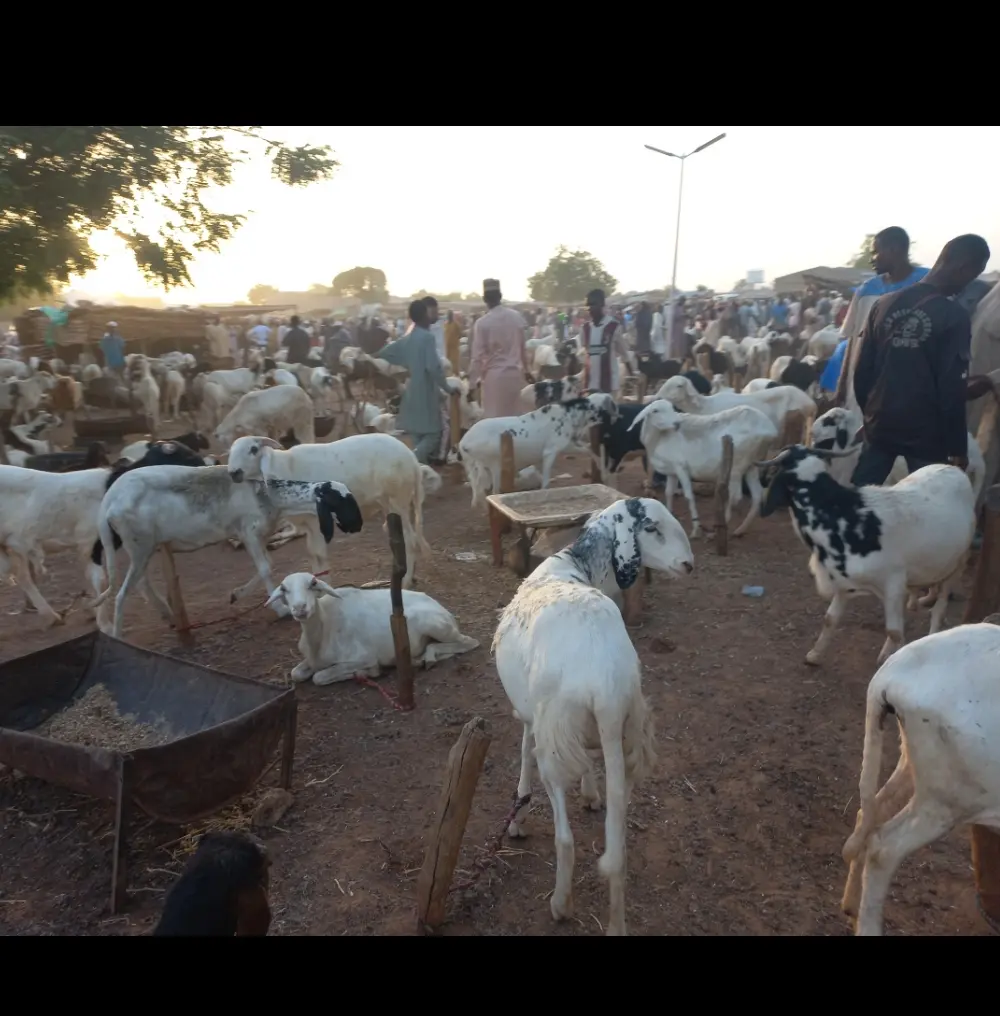
As Eid-el-Kabir approaches, sellers at the Damaturu livestock market have expressed deep frustration over the significantly low patronage despite the large supply of sacrificial animals available for sale.
The market, which typically bustles with activity during this period, has witnessed an unusual calm as buyers stay away due to the unprecedented increase in livestock prices, particularly rams which are traditional sacrificial animals for the celebration.
Dramatic Price Surge
According to livestock dealers interviewed by BenriNews, prices have skyrocketed by 70 to 80 percent compared to last year's rates. Salisu Sa'adu, one of the dealers, revealed that "rams sold for ₦70,000 to ₦80,000 last year are now being sold between ₦200,000 and ₦250,000 this year."
Another dealer, Ali Alhaji Mohammed, confirmed the extreme price range, stating, "We have rams of ₦800,000 and ₦1,000,000," highlighting the premium category that has now become unaffordable for most celebrants.
Buyers' Dilemma
The sharp increase has forced many potential buyers to reconsider their plans. Several buyers who spoke to BenriNews indicated they have decided to postpone their purchases until the Eid day itself, hoping that prices might decrease as sellers become desperate to sell their remaining stock.
Despite the market being well-stocked with rams, sheep, goats, and other livestock brought in from various parts of Yobe State and beyond, the number of buyers remains disappointingly low for vendors who have invested in bringing these animals to market.
Economic Implications
This situation reflects the broader economic challenges facing many Nigerians as they prepare to celebrate one of the most important Islamic festivals. The dramatic price increase has effectively placed the traditional sacrifice beyond the reach of many families, potentially affecting the religious and cultural significance of the celebration for numerous households.
As the festival approaches, both sellers and buyers find themselves in a difficult position – sellers unable to move their inventory at desired prices, and buyers unable to fulfill religious obligations due to financial constraints.